
The Project
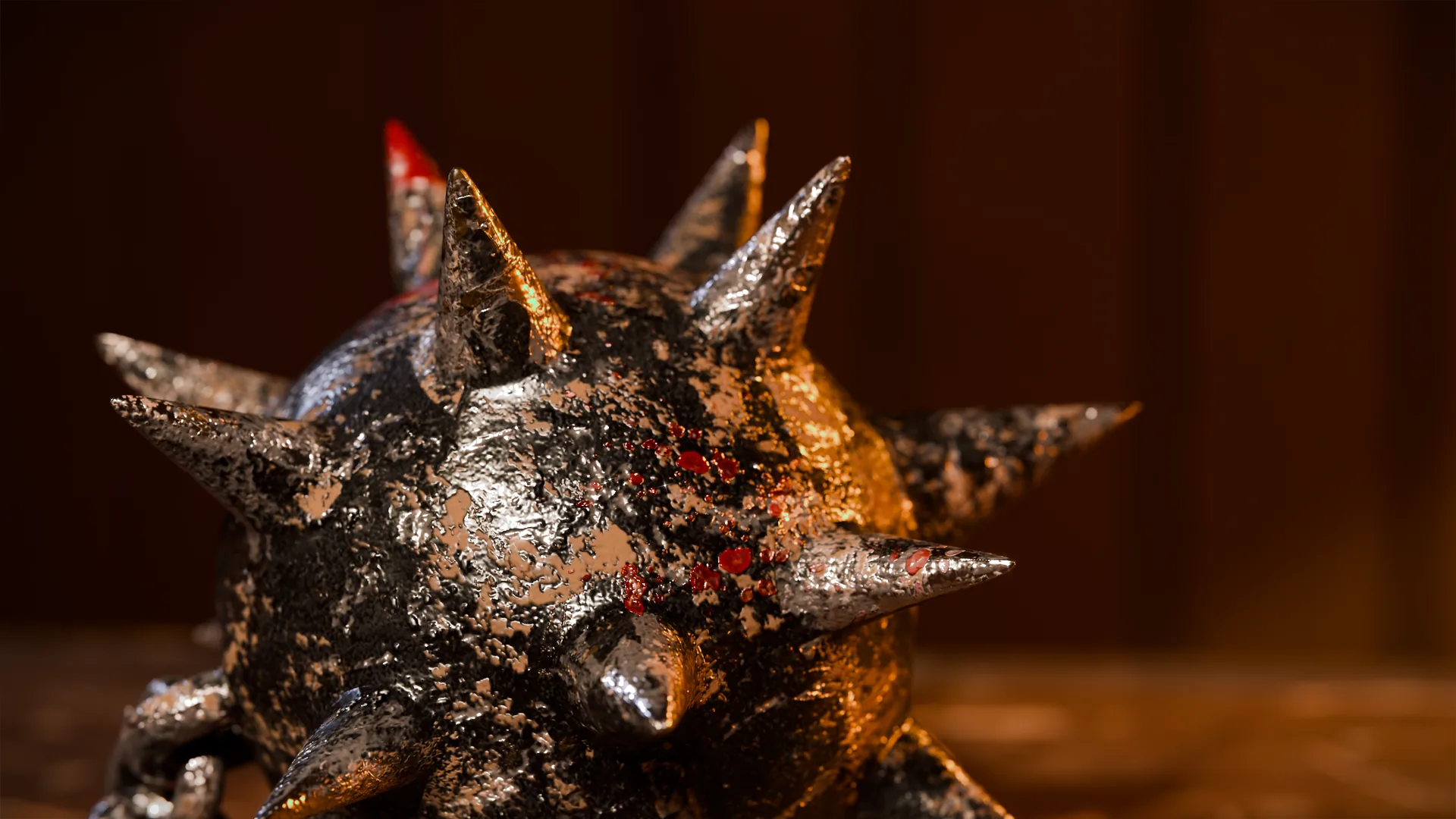
A 3D medieval weapon asset built as part of the Process Documentation module at Glasgow Caledonian University. Modelled in 3ds Max, textured in Substance Painter, and rendered in Arnold and Blender; full pipeline from blockout through to cinematic final renders in a candlelit tavern environment.
The Goal
To develop a complete game-ready weapon asset while documenting the full production pipeline - from low-poly modelling through to final lit renders - and to improve my understanding of hard-surface modelling, baking and texturing workflows.
My Responsibilities
Hard-surface modelling
High-poly sculpting
UVW unwrapping
Baking & texturing
Lighting & rendering
Software & Pipeline
3DS Max
Substance Painter
Arnold
bLENDER
Credits
Digital Media Commercialisation module, Glasgow Caledonian University, 2025.
Final Images
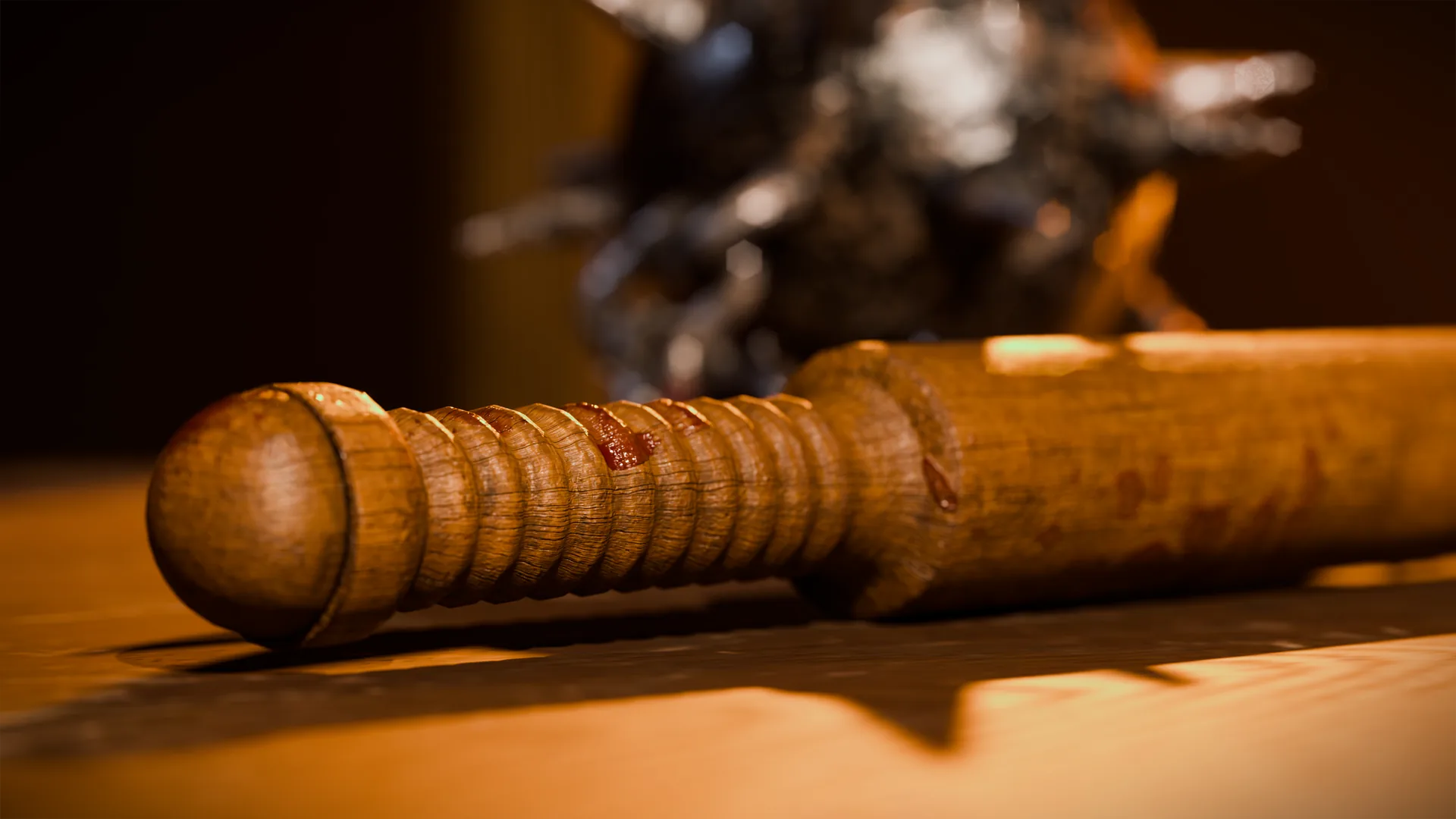
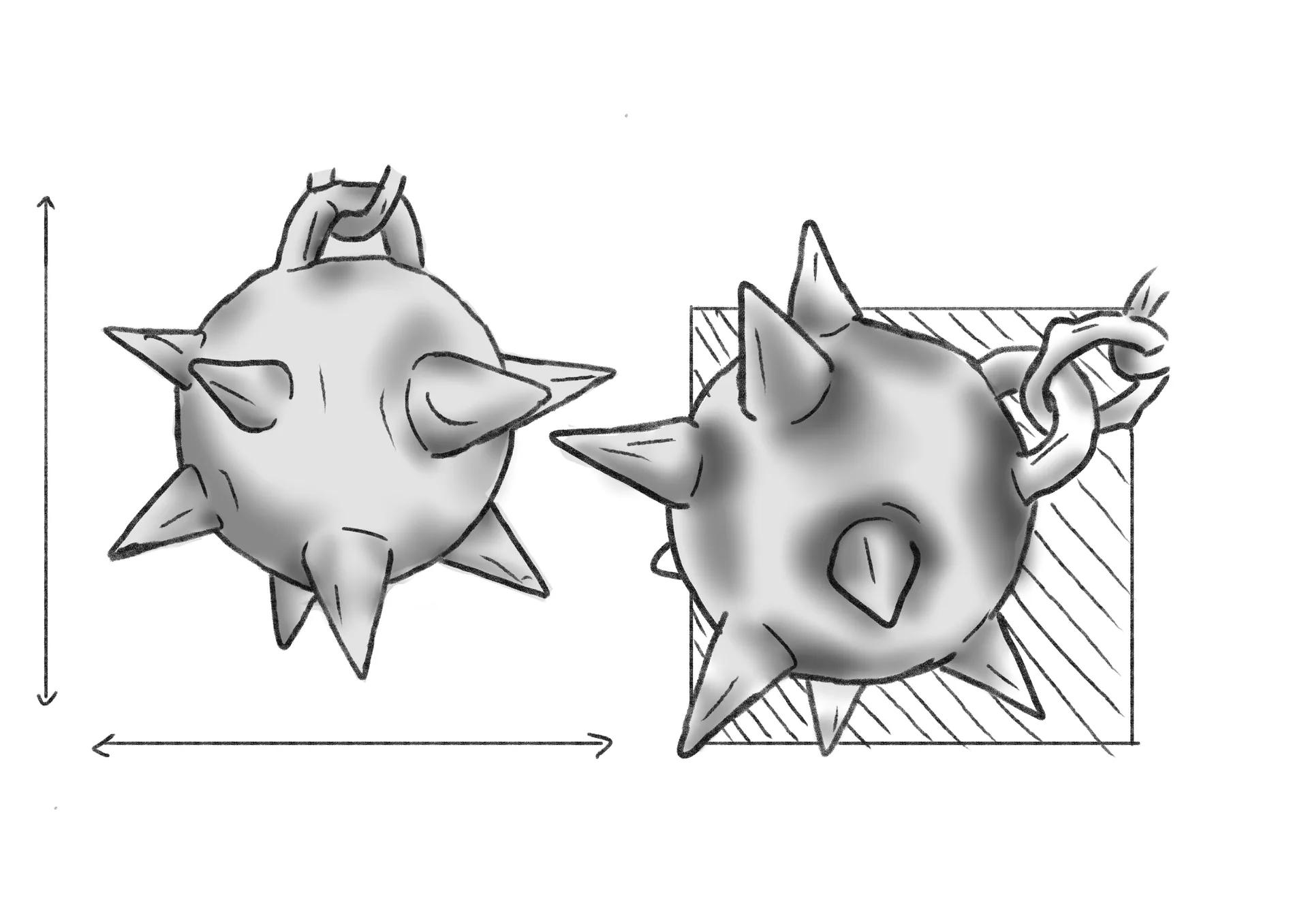


01
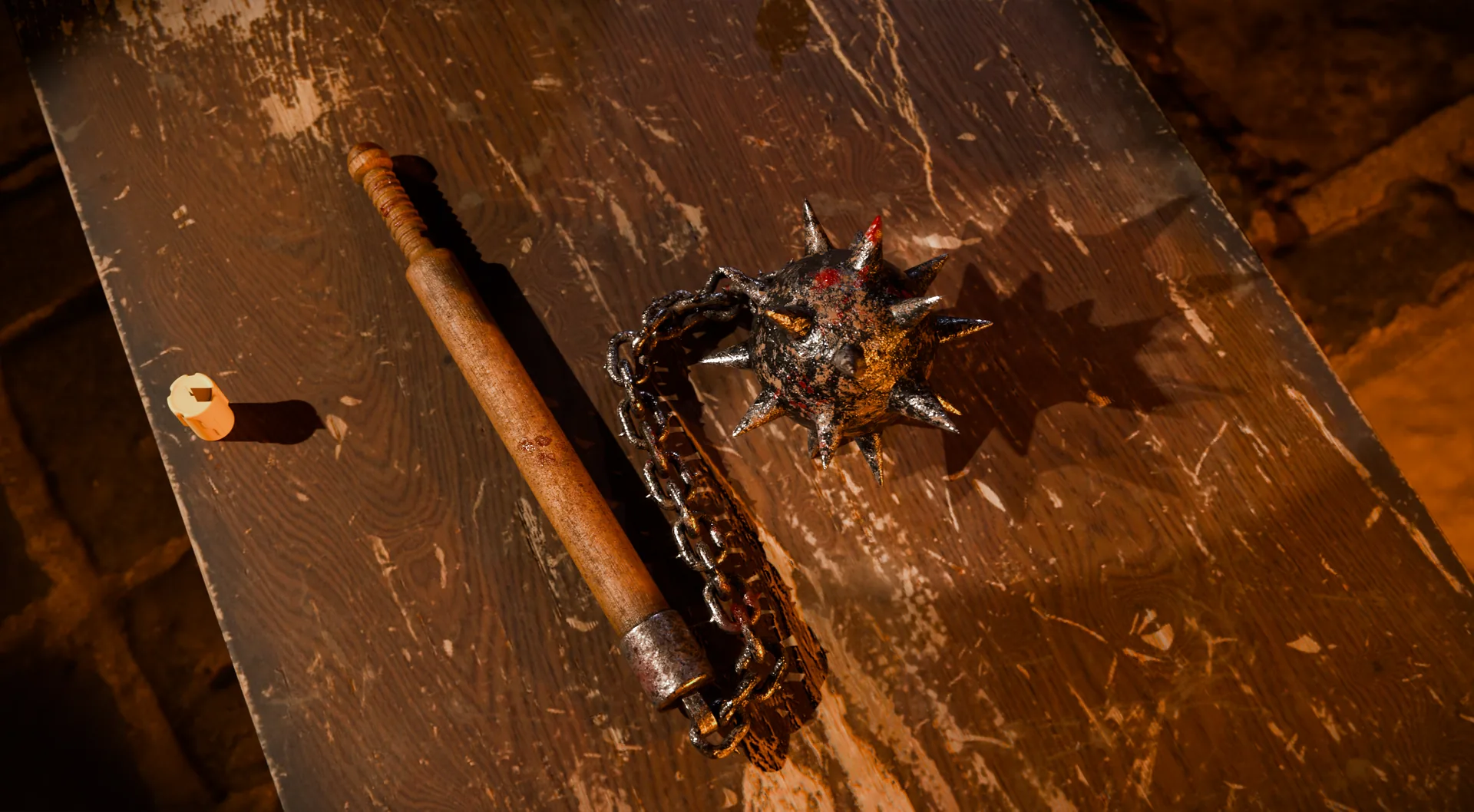
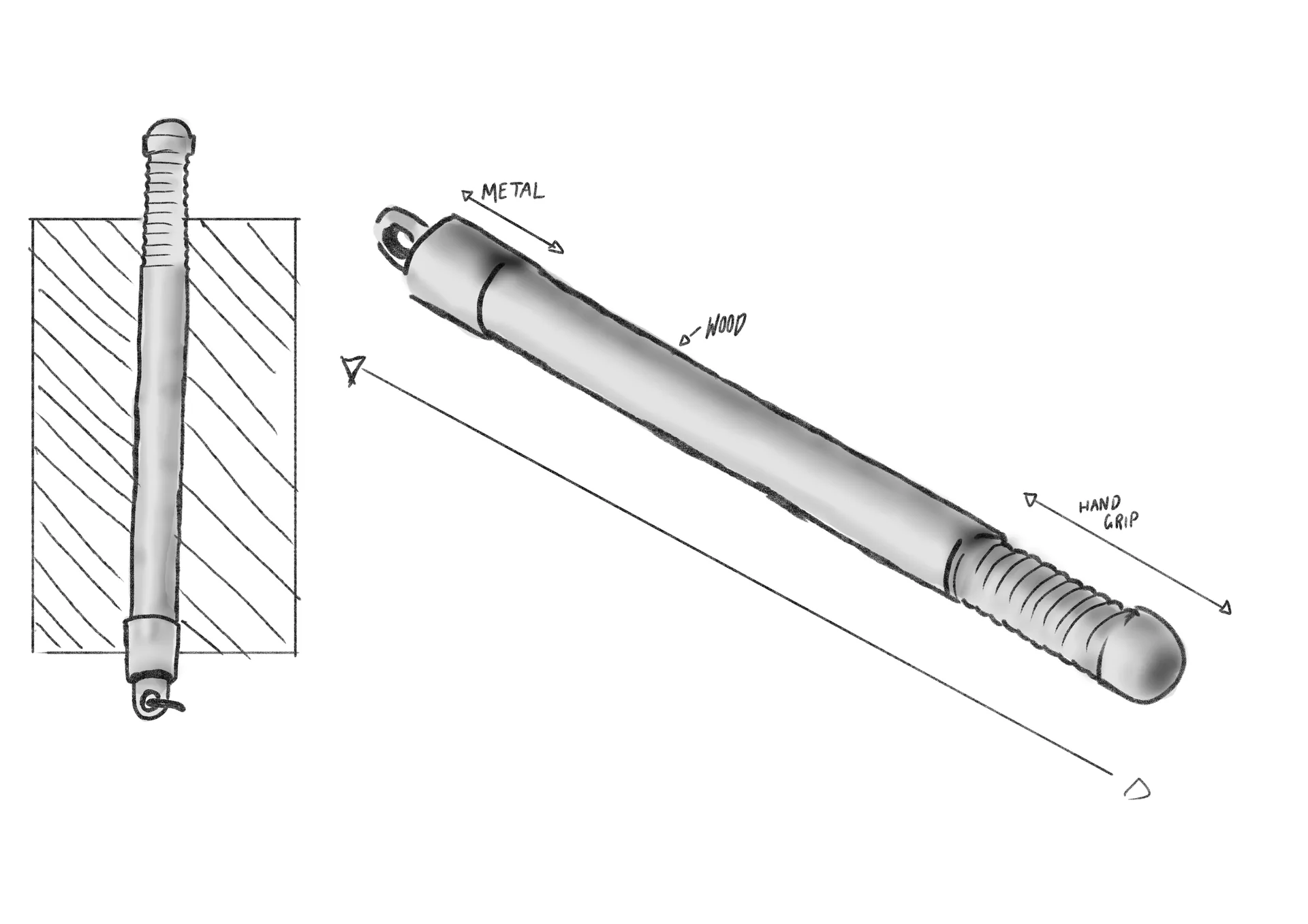
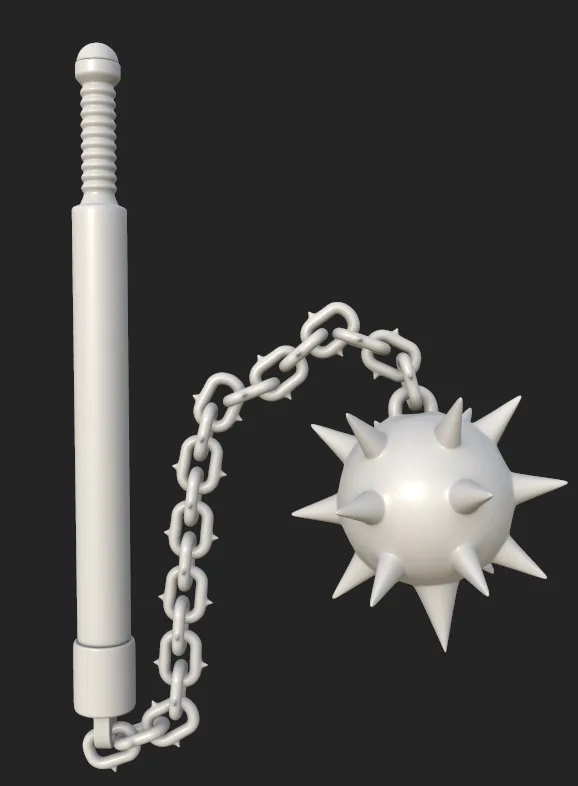
The design process began with a standard cylinder as the initial form in 3DS Max. The primary stick section was divided into three distinct components - the main stick, the top rounded section, and the bottom metal part - allowing for a more controlled approach to each segment.
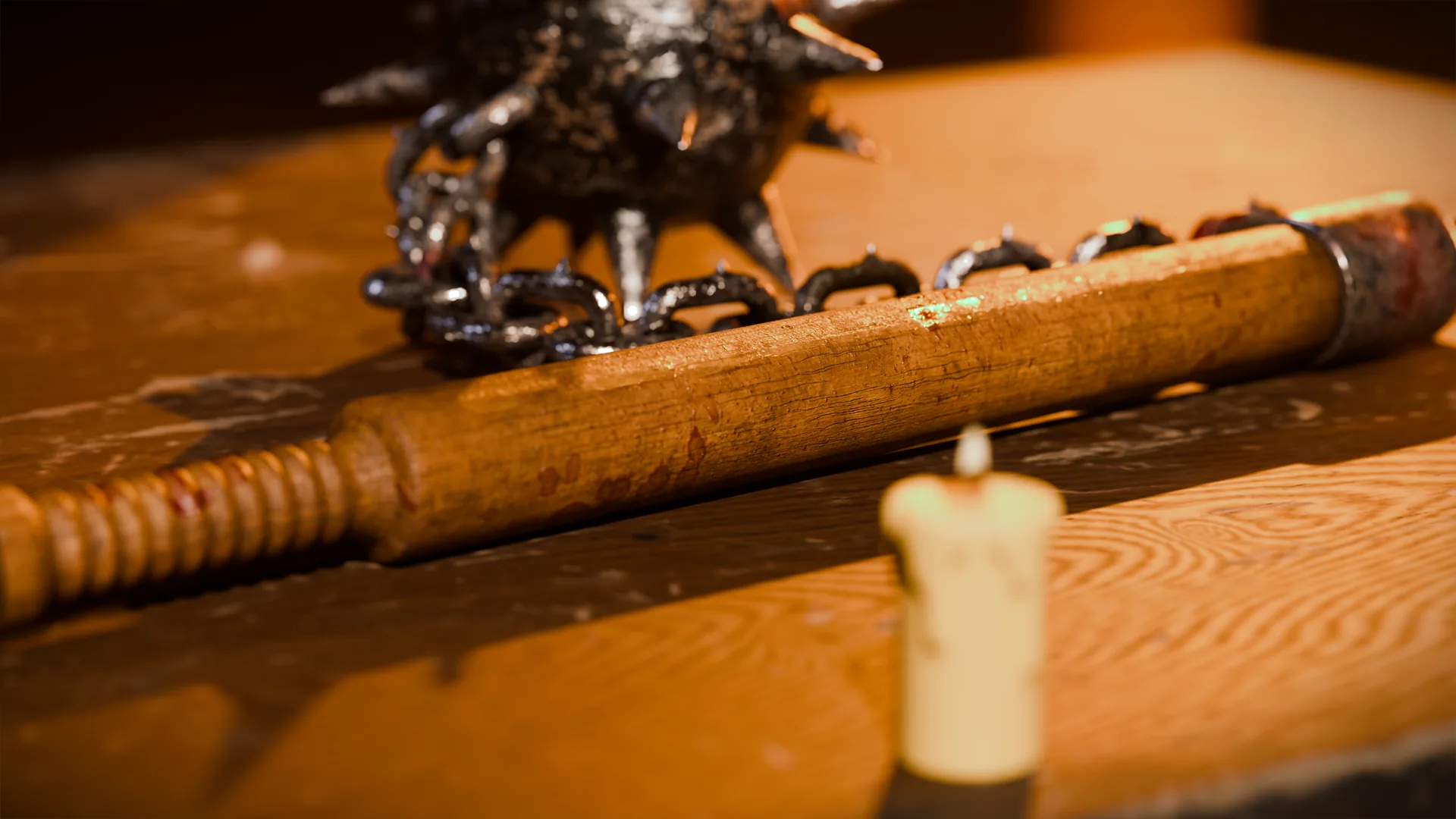
The grip was built using a basic cylinder with multiple edge loops to achieve the specific dips and grooves of the handle. This method provided greater flexibility and precision than using an extended primitive shape.
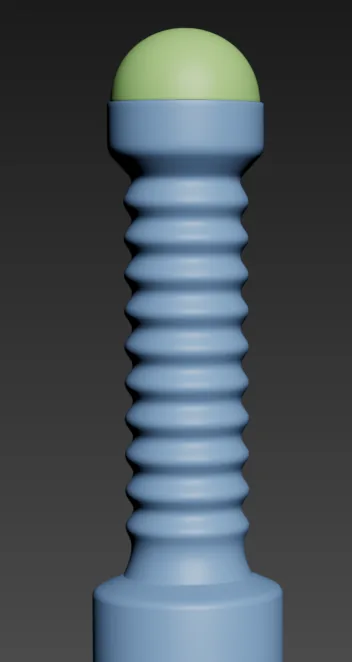
02
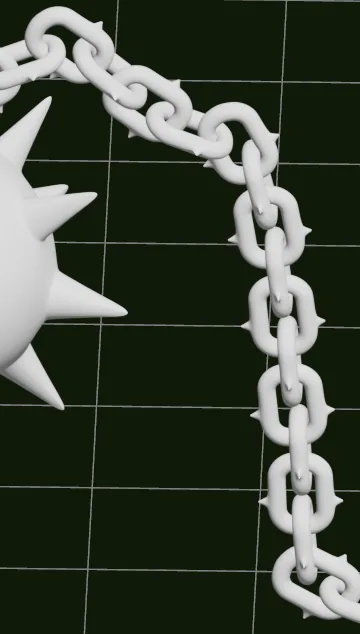
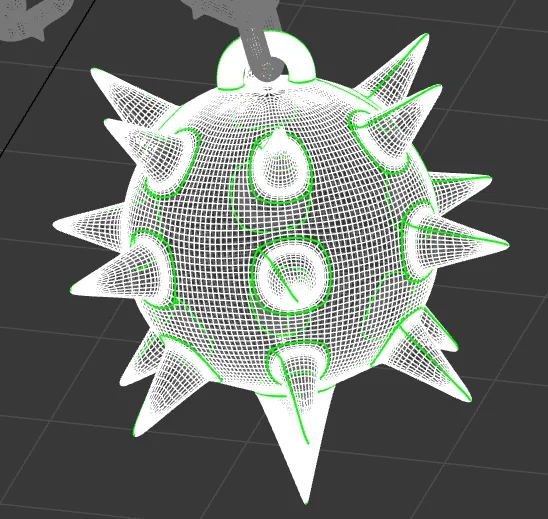
The low-poly model was transformed into a high-poly version using chamfer modifiers on key edges and multiple support loops. The Turbosmooth modifier with two iterations was applied to achieve a smooth, refined finish across the handle and spiked ball.
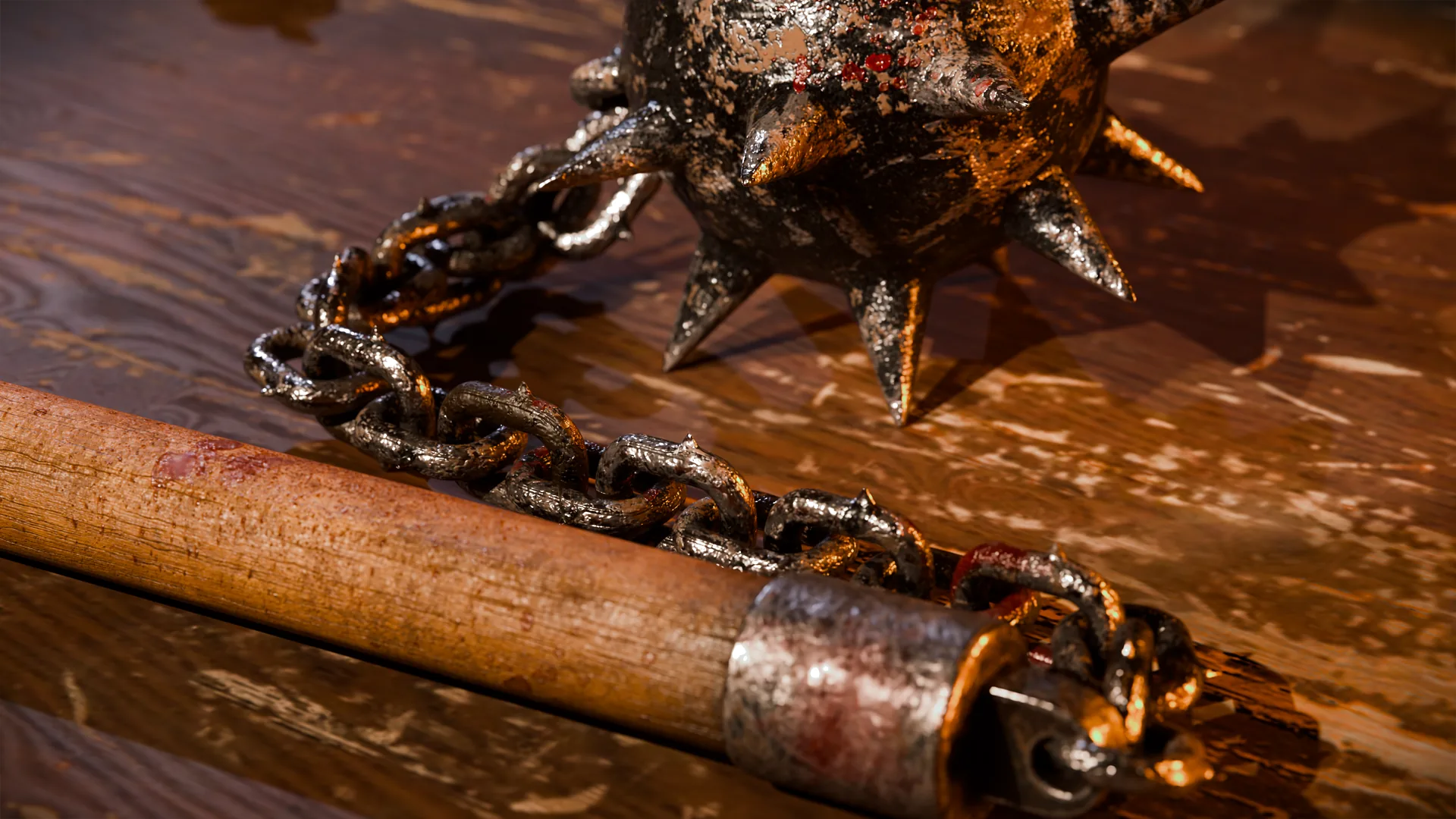
The chains were designed with a torus shape as the base, incorporating support loops for detail. A line object combined with an array modifier produced the repeating chain structure that connects the spiked ball to the handle.


03
UVW unwrapping presented significant challenges, particularly with the rounded spiked ball shape. After eight attempts, the edges were manually straightened using the texture checker to ensure proper alignment. The baking process in Substance Painter required additional support loops on the low-poly to match the high-poly more closely.
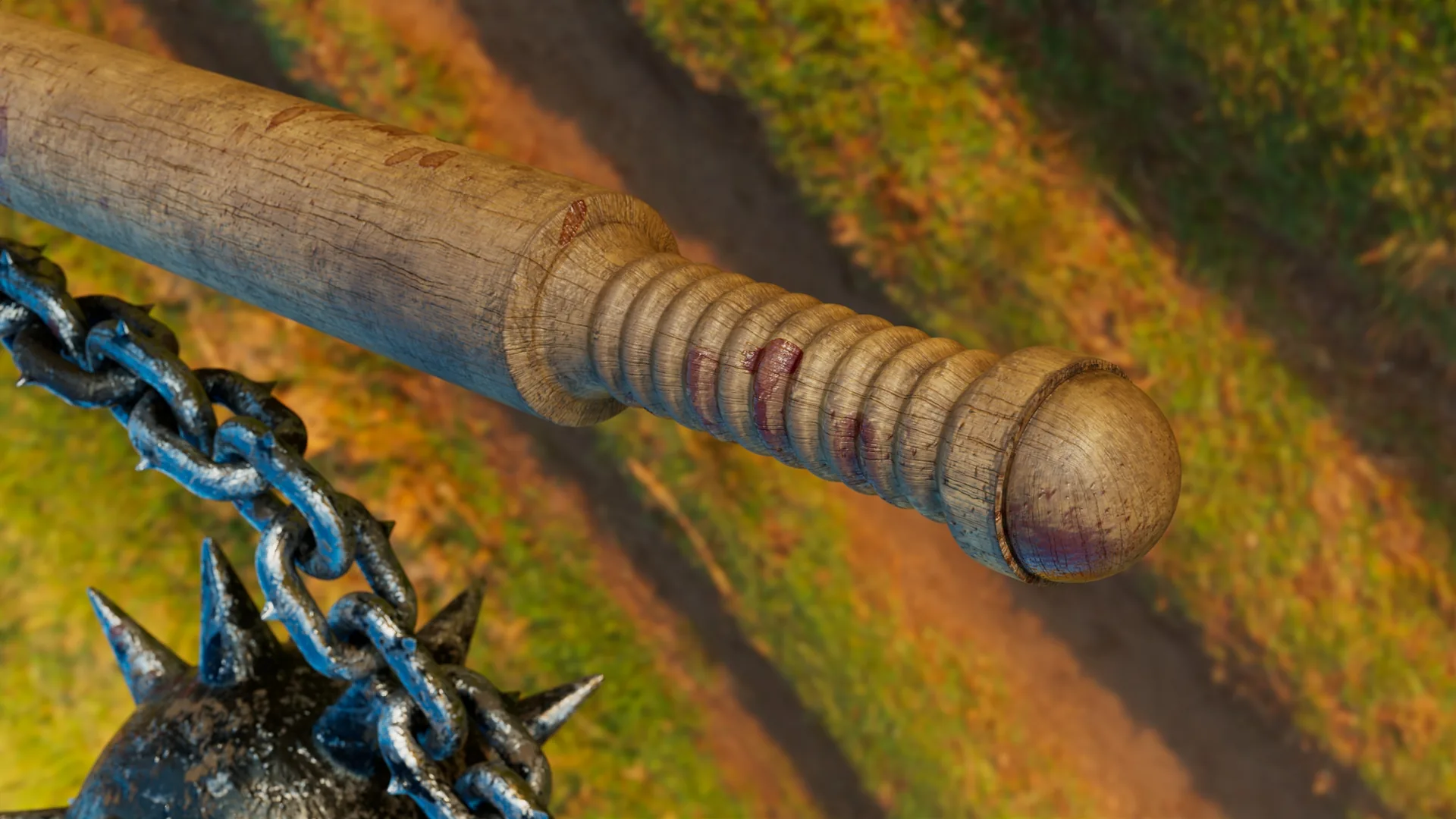
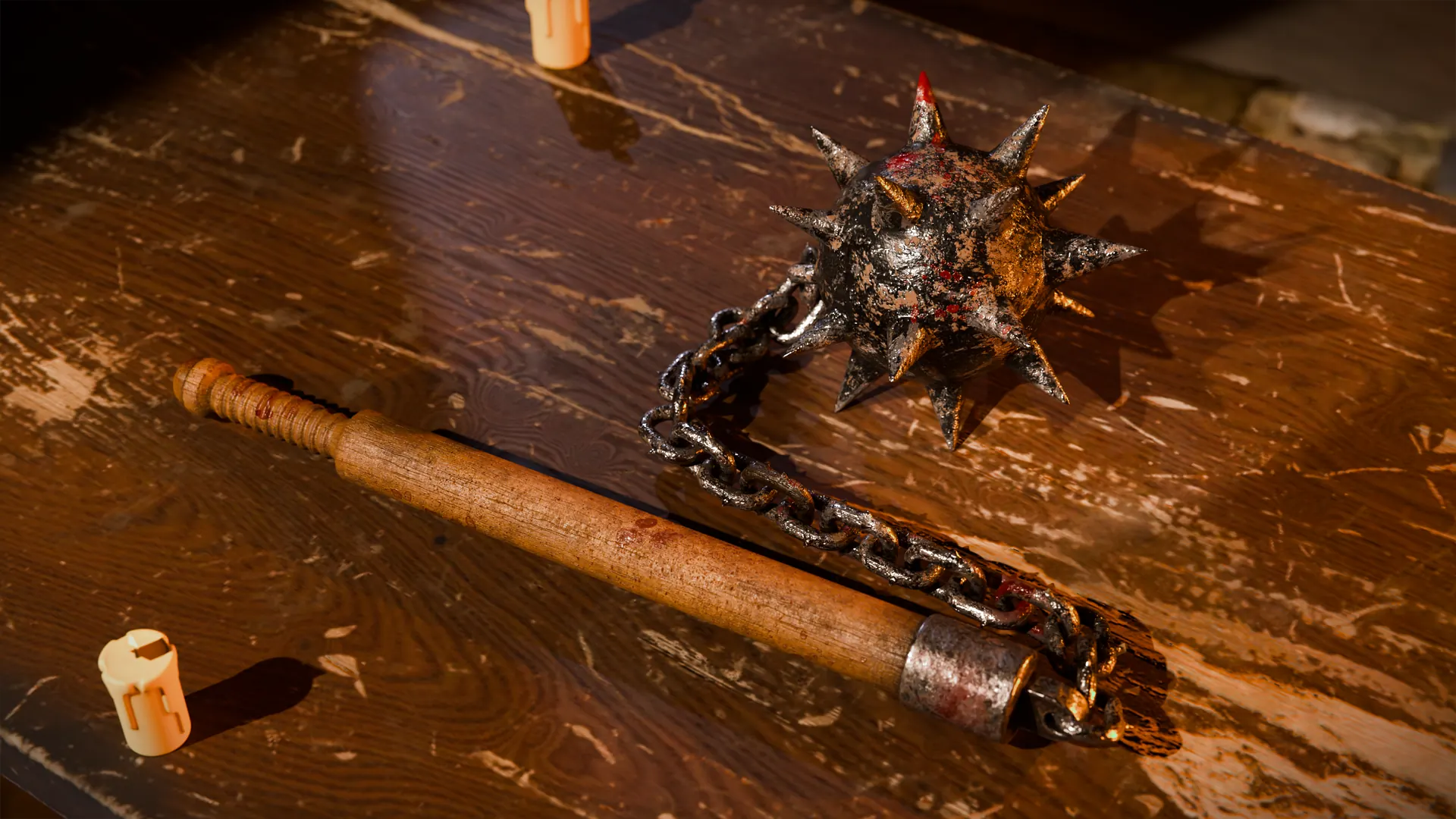
The texturing aimed for a weathered, battle-worn appearance. Black masks, height layers and edge wear techniques were used to build up the iron and wood materials. Blood detail was added to enhance the impression that the asset would be used in a game environment.

04
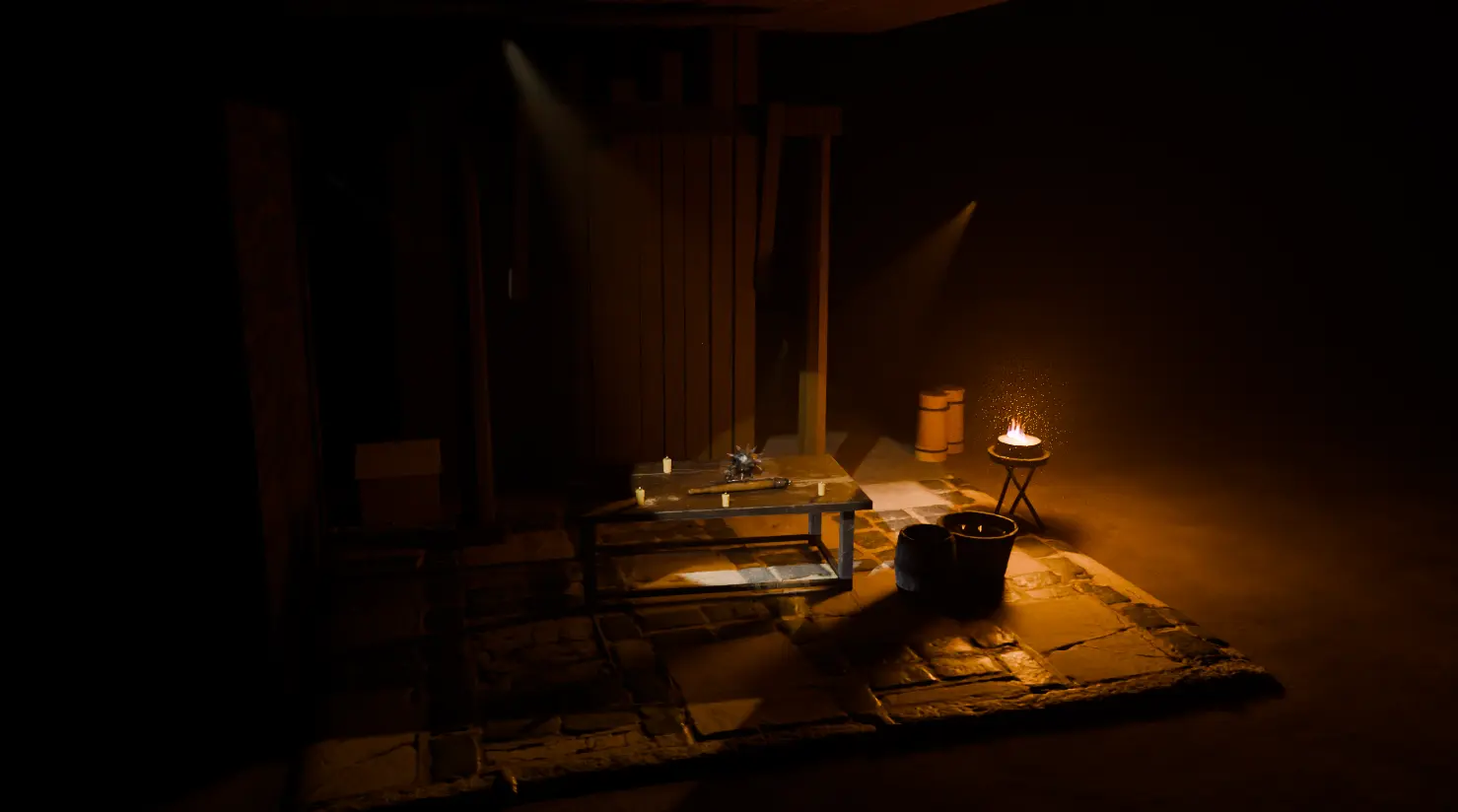
The final renders were lit in a candlelit tavern environment using practical candle sources for key and rim. Warm fill accentuates the contrast between oxidised metal and aged wood. Texture maps were applied through Arnold's standard surface shader, with separate roughness variation per material zone.
Camera positioning was refined to showcase material detail and form across multiple angles. Close-up shots isolate the spike cavities, chain connector, and grip wear, while the hero shot frames the full weapon in context against the tavern scene.
Reflection
This project highlighted areas for improvement in the high-poly to low-poly baking process and the material editor. A primary objective was maintaining sound topology and avoiding irregular shapes - a principle I will continue to prioritise in future projects.