
Strathclyde Partnership for Transport (SPT), in collaboration with Glasgow Caledonian University. Research validated through public surveys and SPT professional interviews.
Final Film
.webp)
.webp)
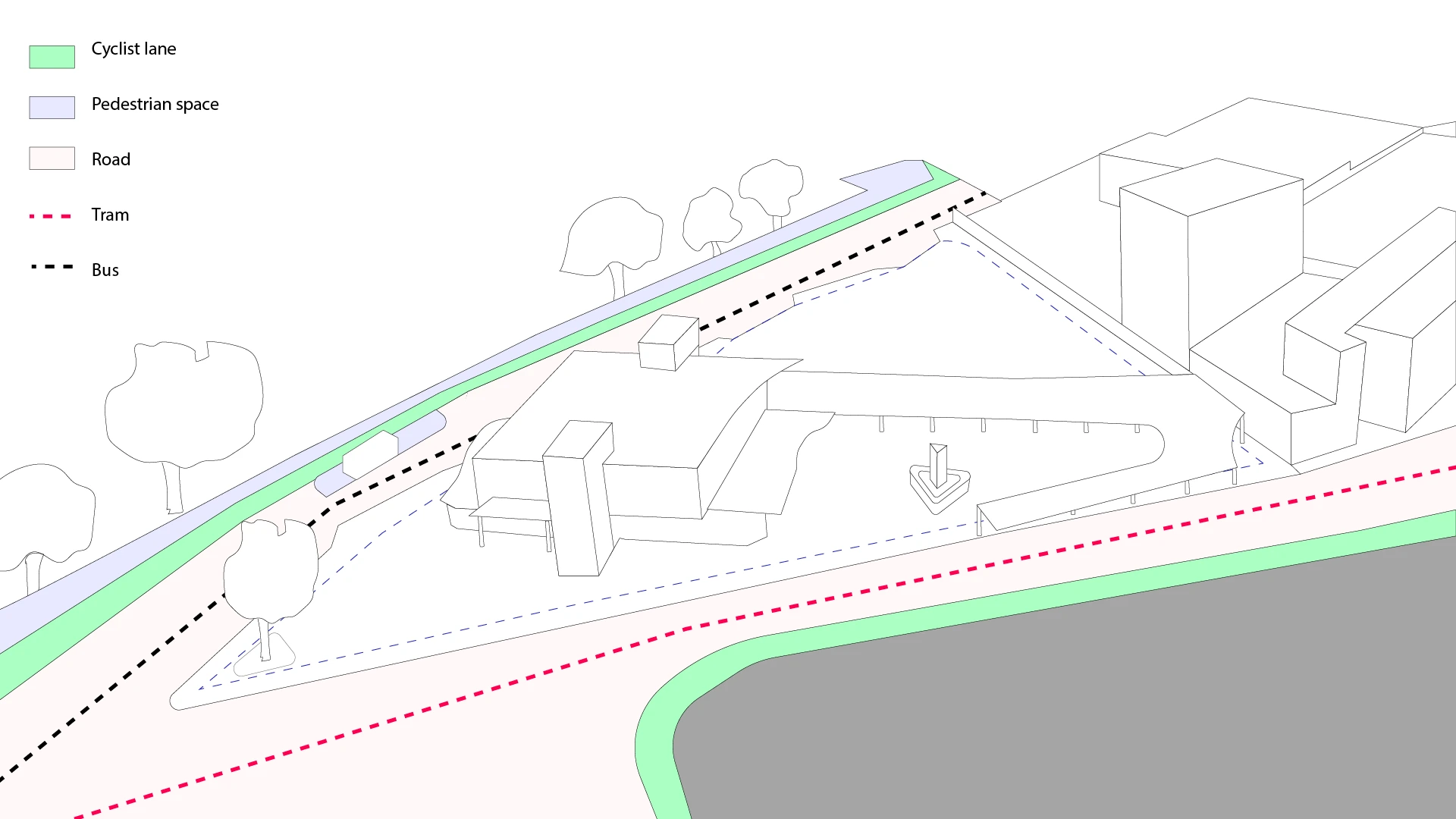
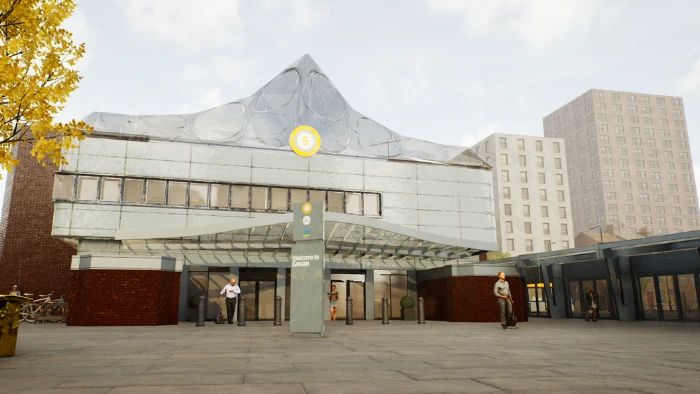
The project began with immersive research into the Clyde Metro's proposed Govan Interchange. Pinterest boards were built as live visual reference libraries covering contemporary tram infrastructure, Glasgow's Avenues Project and historical imagery of Govan, ensuring the redesign was aspirational yet contextually grounded. SPT provided planning resources and professional insights throughout, keeping the design aligned with real transport proposals.
Without official architectural drawings, an on-site survey was conducted at the Govan Interchange using a 6'4" human scale reference to photograph existing materials, canopy ribs, mullions, paving and street furniture. These became direct texture references and proportion guides. Concept sketches then explored road, tram and cycle lane configurations, canopy variations and shelter designs: flexible blueprints before any geometry was committed in Maya.
.webp)
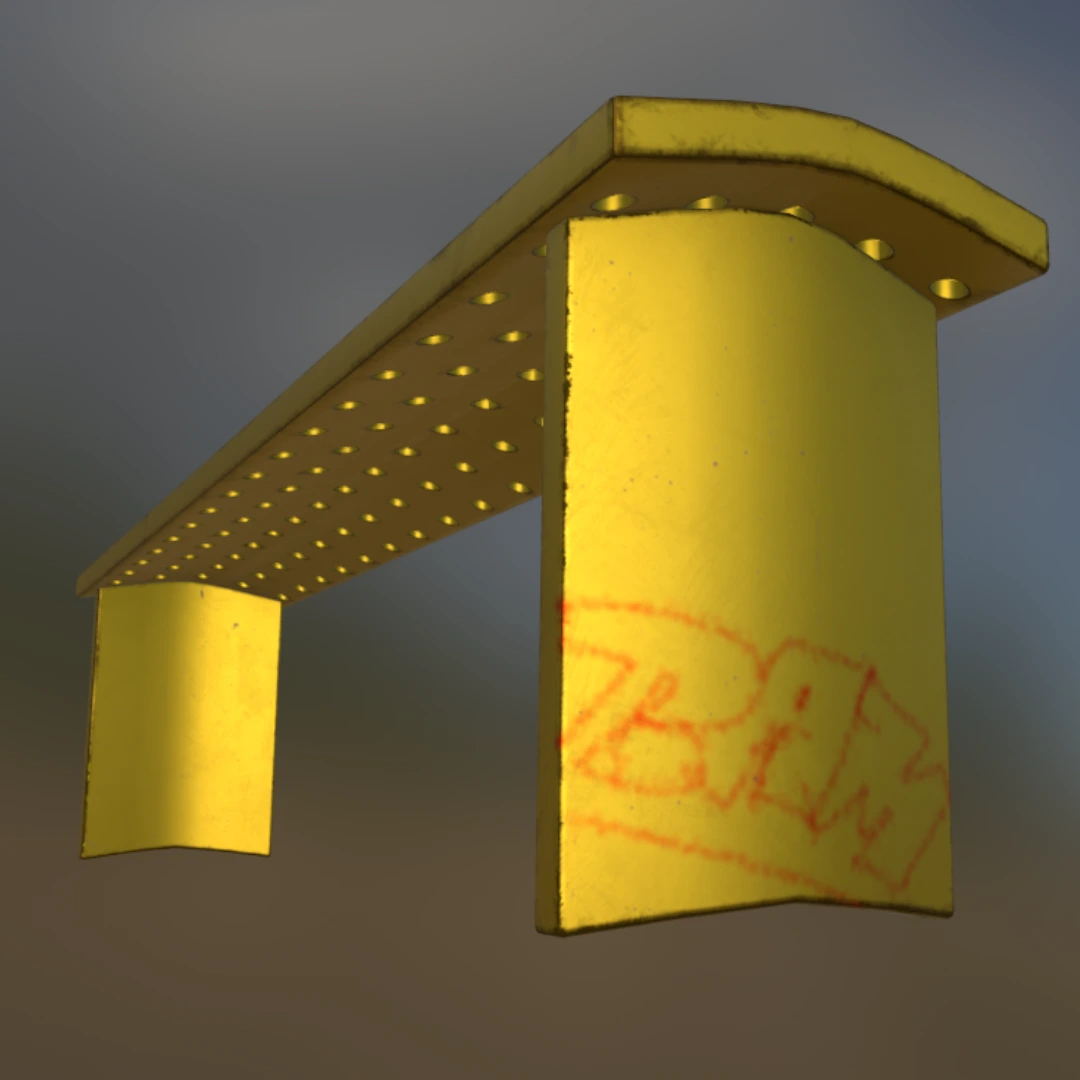
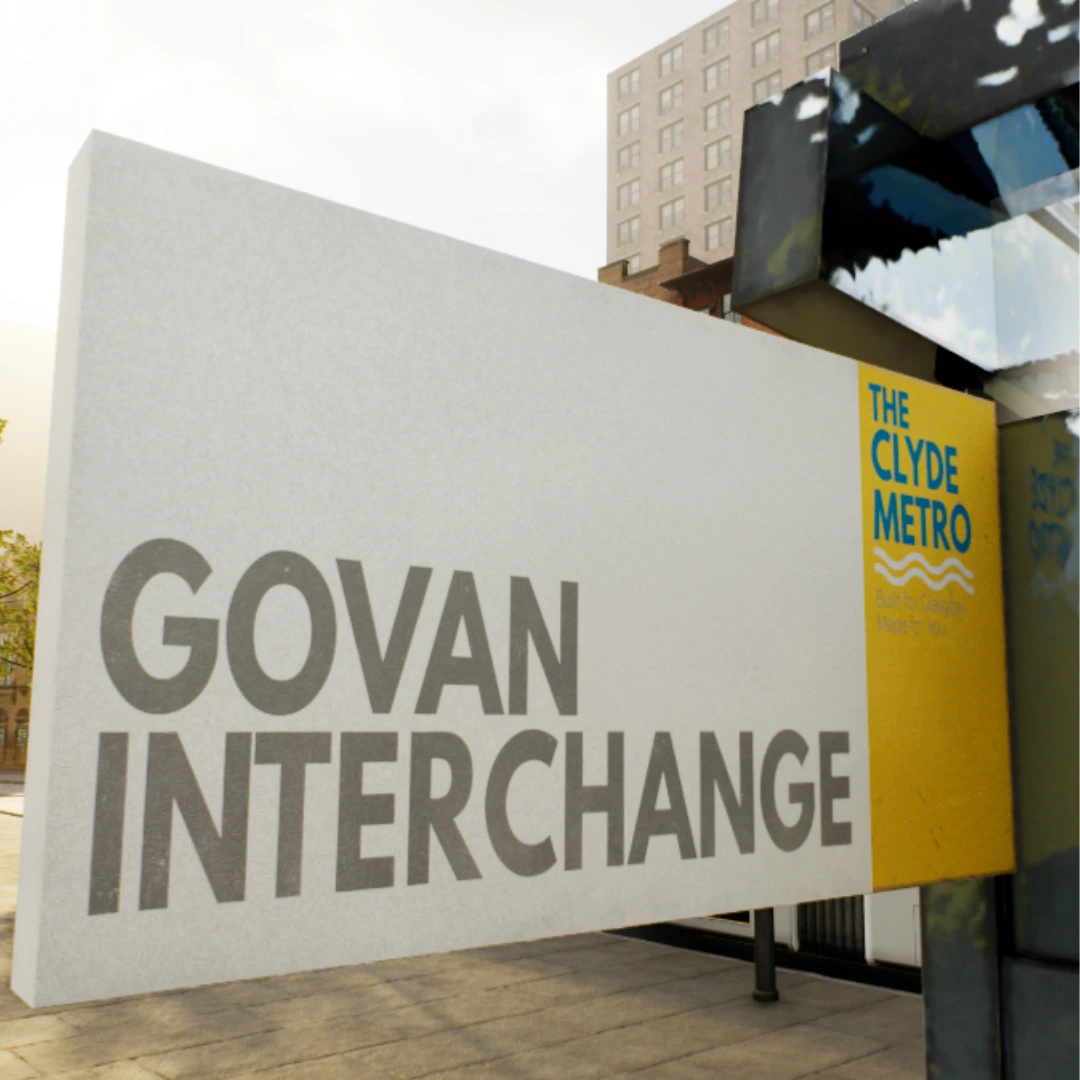
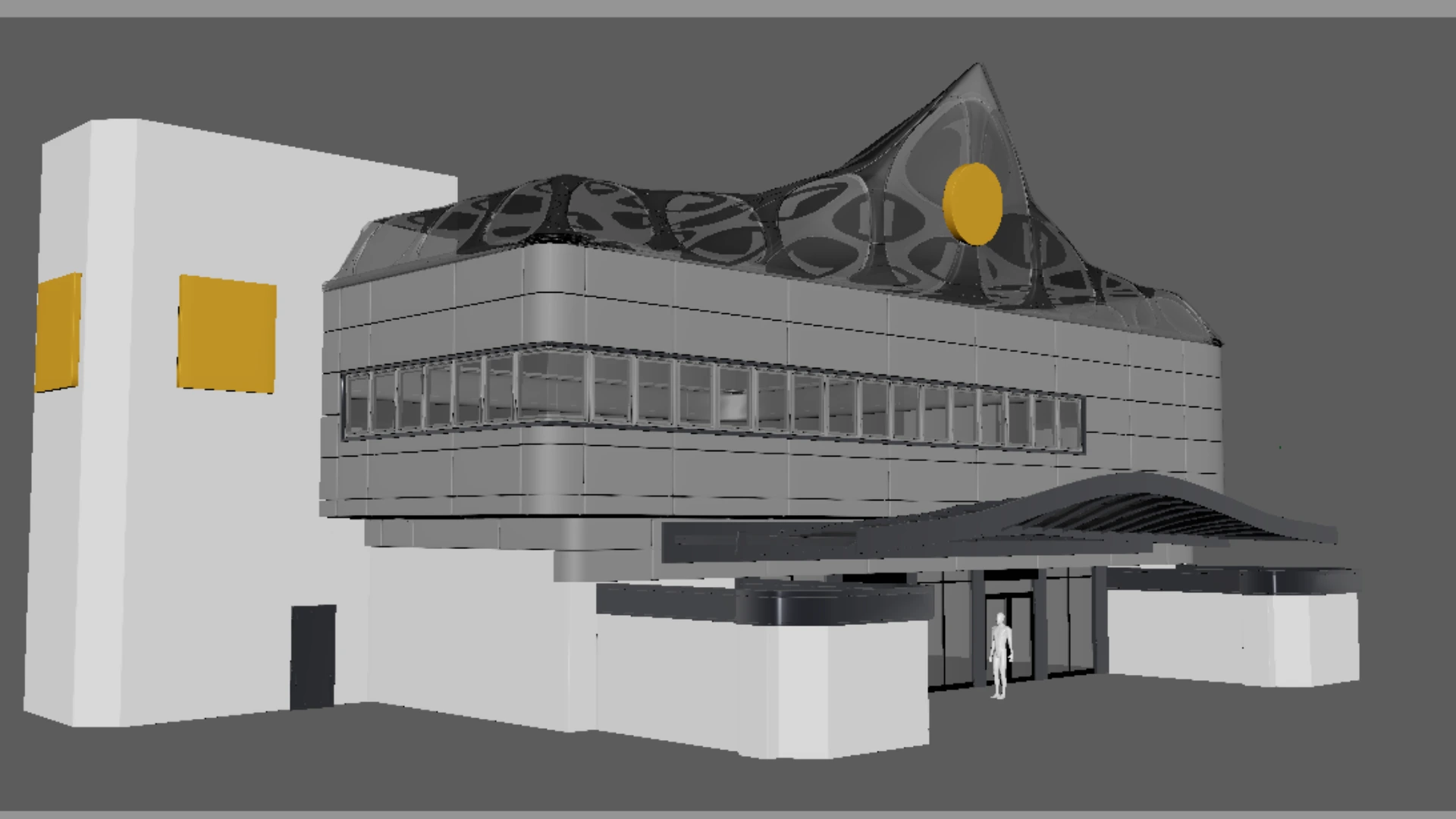
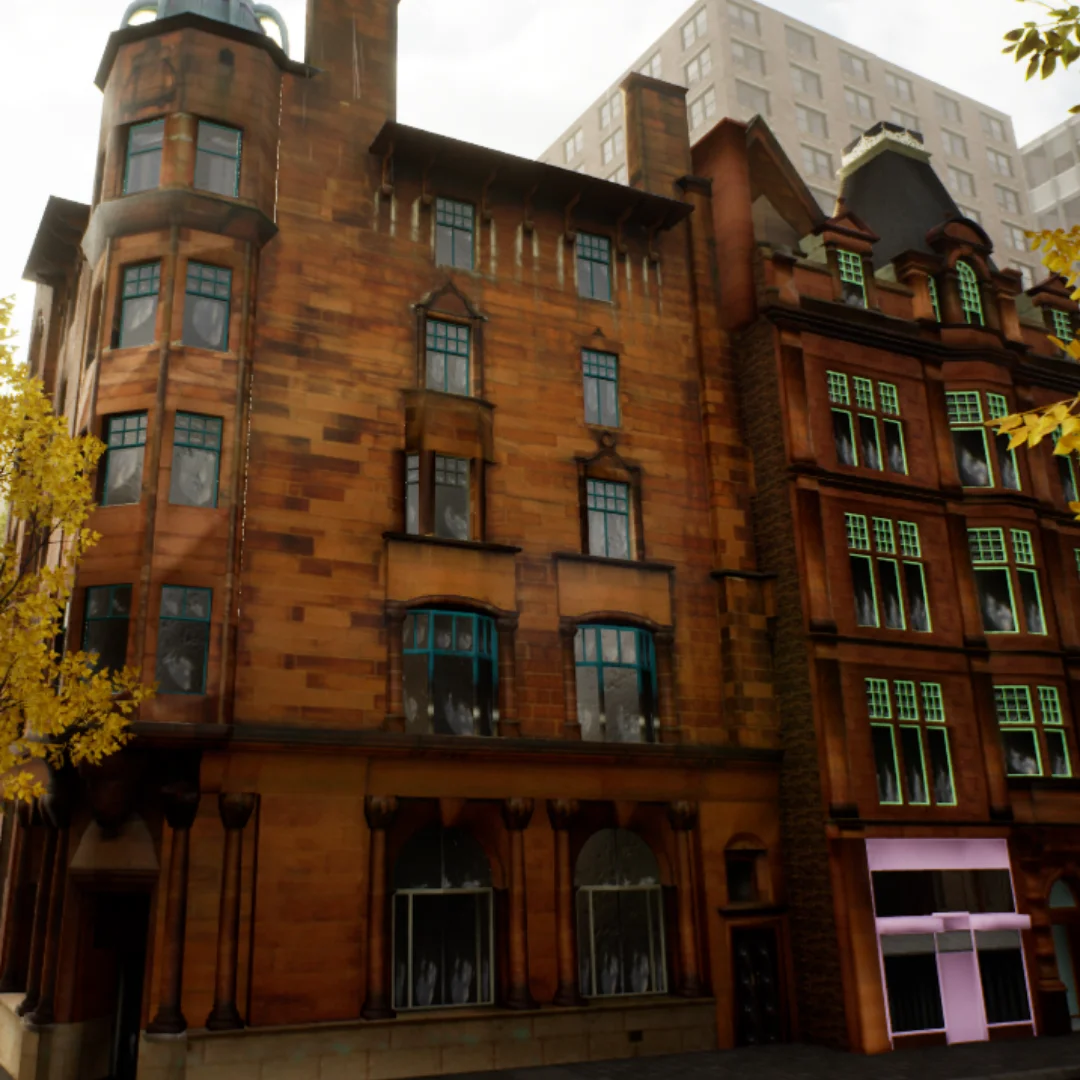
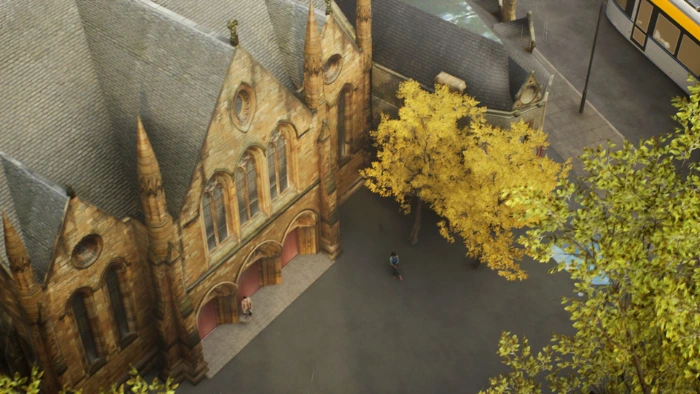
The Govan Interchange was built as a modular kit in Maya: facade panels, window modules, mullions, parapets and canopy metal sections, enabling rapid iteration with consistent proportions. Quad-dominant topology, bevelled silhouette edges and Boolean window operations were followed by full mesh cleanup for clean FBX export. Python scripting automated UV repair, normal sanity checks and hard/soft edge controls across the full asset library. Custom props including benches, ticket machines, bus stops, tram shelters and wayfinding signage completed the public realm.
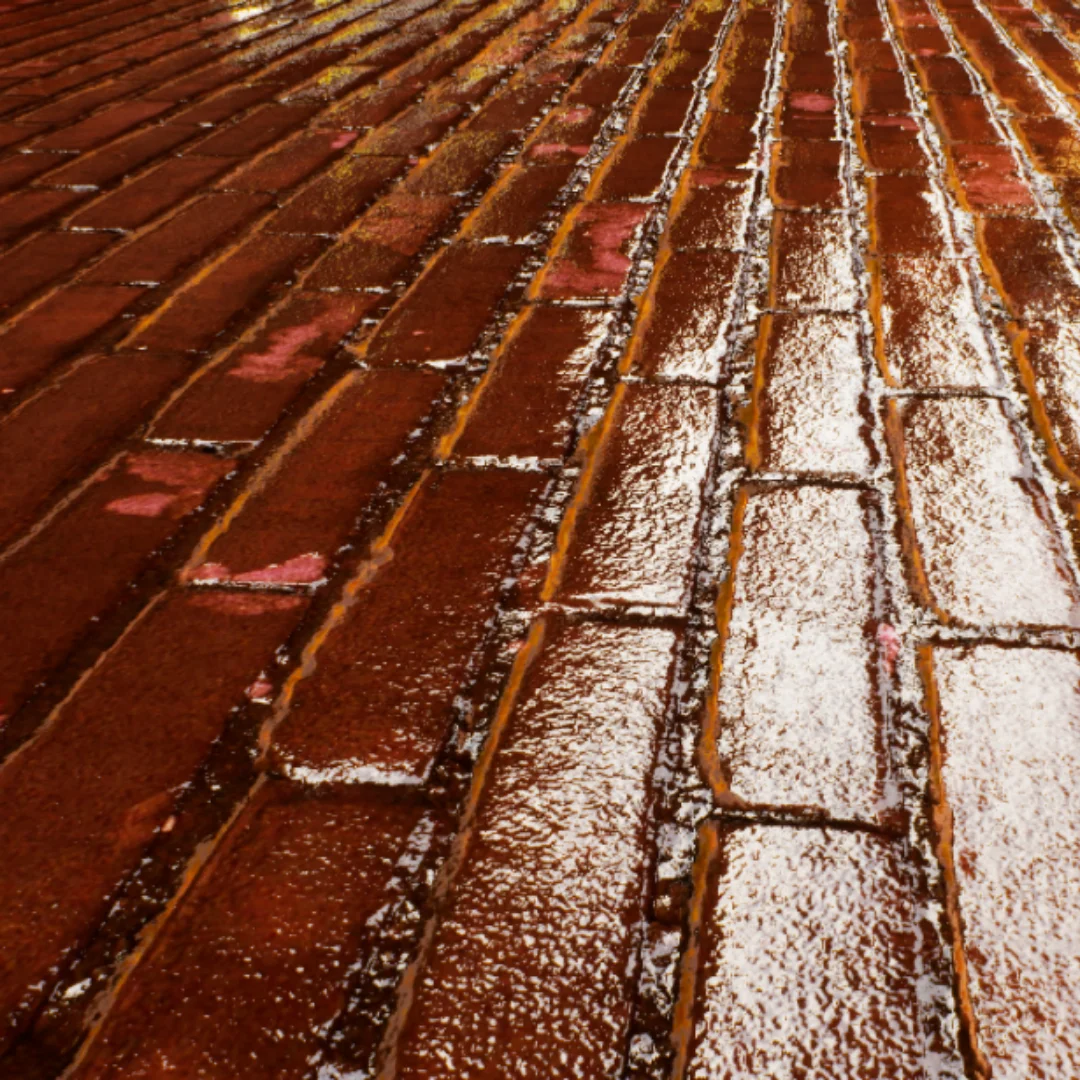
UVs were unwrapped with camera-based initial projections, manual cutting and shell-aligned layouts for consistent texture flow in Substance Painter. PBR smart materials used High Detail Smart Masks Vol. 04 for layered dirt, streaking and weathering variation, with bespoke alphas for bolt markings and minor signage. All textures exported at 4K in Unreal’s packed format: Base Colour, ORM and Normal maps per asset.
.webp)
.webp)
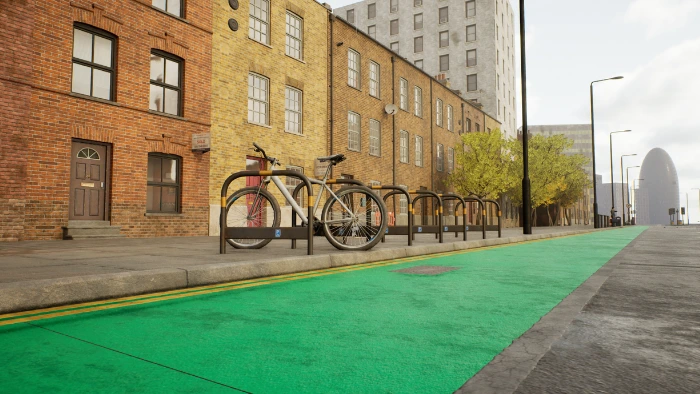
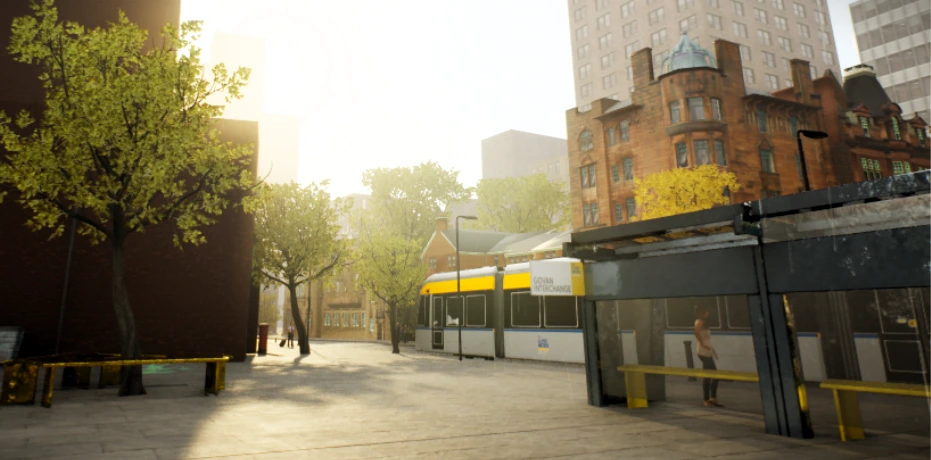
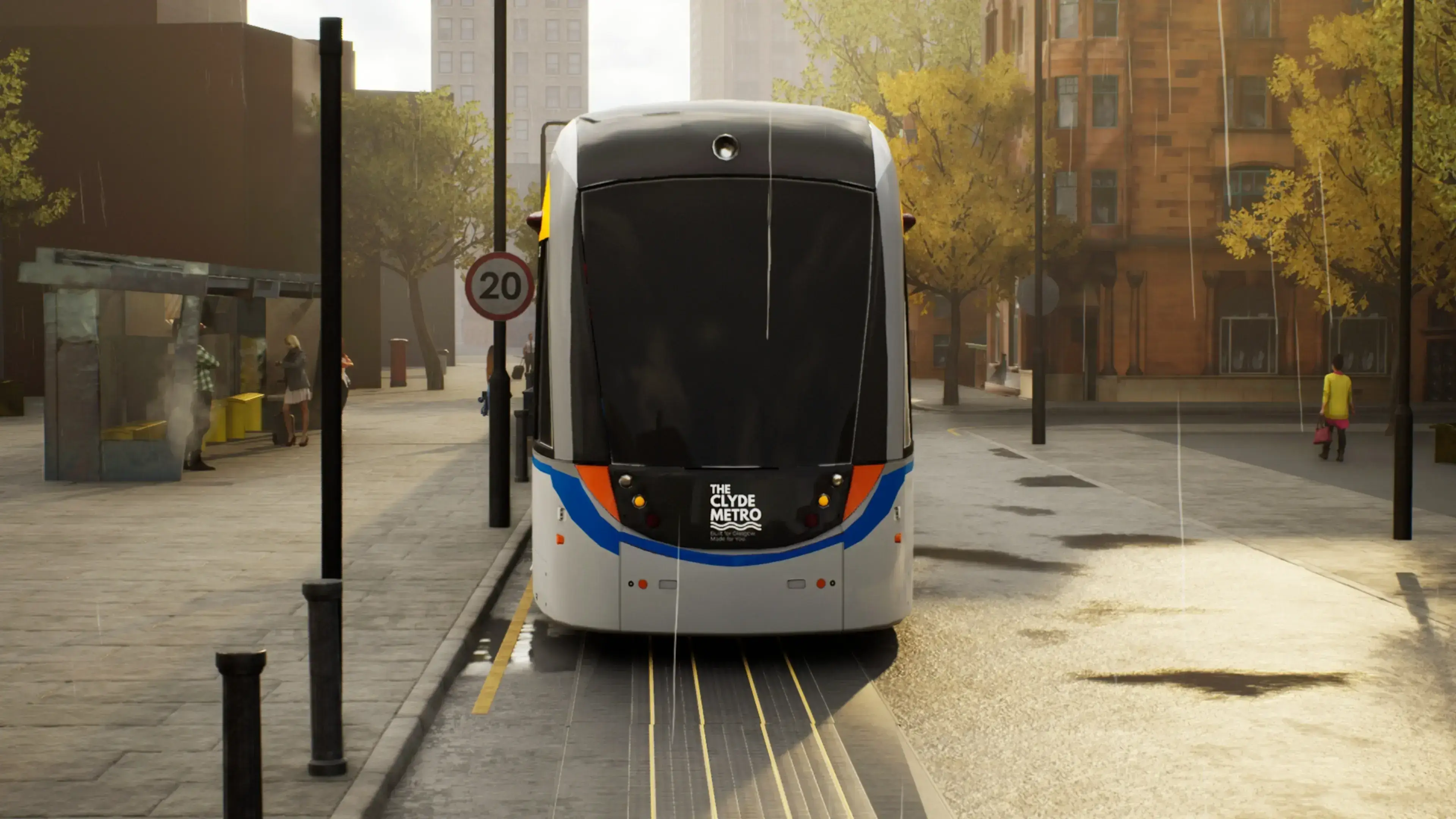
All assets were assembled in Unreal Engine 5.6, with modular interchange components grouped into Blueprints for spatial accuracy. Lighting was built around a warm summer-rain atmosphere: a directional light at 6500K with Lumen global illumination, Exponential Height Fog at 0.07 density and Sky Atmosphere tuned for warm Rayleigh scattering. EasyRain Niagara particles with wind-directional rain, world-anchored placement and surface wetness puddle materials across all hardscape completed the Glasgow evening mood. SPT’s tram was rebranded with Clyde Metro livery; signage and platform identifiers were integrated as decal materials.
Nine CineCameraActors across seven cut transitions guided the viewer using smooth dollies, variable focal lengths and manually adjusted focus. The PNG sequence was assembled in After Effects, compositing the Clyde Metro brand identity: logo, colour palette and animated title sequence. Premiere Pro handled layered audio: urban ambience, birdsong, children playing and an aspirational music track. The final film was validated through SPT professional interviews and public pre/post-visualisation surveys, demonstrating measurable improvements in comprehension and willingness to participate in consultation.
Stills

.webp)
Reflection
This project took me through a full industry-standard 3D pipeline: site survey and modular Maya modelling, Substance Painter PBR texturing, Unreal Engine 5.6 cinematic rendering, and post-production across After Effects and Premiere Pro. The research layer was new: using the visualisation as a research instrument, then validating its impact through SPT interviews and public surveys. The most important lesson was that hyper-realism in architectural visualisation carries real responsibility. The risk of over-promising to communities means every design decision must be grounded in real-world context and communicate possibility without false certainty. Produced in partnership with Strathclyde Partnership for Transport. MSc 3D Design for Virtual Environments, Glasgow Caledonian University, 2025.